
What Is PVC Membrane Foil?
PVC membrane foil is a decorative plastic film used to cover furniture panels, MDF doors and other suitable surfaces. It helps give furniture a finished appearance with different colours, patterns and surface finishes.
PVC membrane foil is commonly used in furniture manufacturing, especially for kitchen cabinet doors, wardrobe doors, modular furniture and decorative furniture panels.
One of its main advantages is that suitable films can cover shaped panels, including designs with grooves, edges and decorative profiles. This makes it a useful surface material for furniture manufacturers who want to offer different designs.
PVC membrane foil is available in different thicknesses, widths, colours and finishes. The right product depends on the furniture design, panel material and manufacturing process.
At TopDecor, our PVC membrane foil range includes:
- Thickness: 0.12 mm to 0.35 mm
- Widths: 850 mm, 1000 mm, 1250 mm and 1320 mm
- Roll Length: 350 metres
- Available Finishes: Matt and Gloss
- Minimum Order Quantity: 2 rolls
These specifications help furniture manufacturers and material buyers select film according to their production requirements.
What Is PVC Membrane Foil and How Does It Work?
PVC membrane foil is a PVC-based film made for covering compatible furniture panels and shaped components. In many membrane-door processes, the panel and film are placed in a machine. Heat softens the film, while vacuum or pressure helps draw it over the panel. Adhesive bonds the film to the prepared surface.
The finished result depends on more than the film alone. Important factors include:
- Panel shape, cleanliness and surface preparation.
- Film type and its ability to form over the shape.
- Adhesive selection and application.
- Heat, pressure, vacuum and pressing time.
- Trimming and finishing after pressing.
A well-chosen film cannot make up for poor preparation or incorrect processing. For production use, request technical information and carry out trials on the actual panel and equipment.
Basic PVC Membrane Foil Application Process
- Panel preparation: MDF panels are cut, shaped, and cleaned.
- Adhesive application: A suitable adhesive is applied in accordance with the film and machine requirements.
- Film positioning: PVC membrane foil is placed over the prepared panel.
- Membrane pressing: Heat and vacuum or pressure help the film follow the panel shape.
- Cooling and trimming: The finished panel is cooled, trimmed, and inspected.
The final result depends on film quality, adhesive compatibility, panel preparation, and machine settings.
A good production trial is recommended before starting large-scale manufacturing.
Types of PVC Membrane Foil
PVC membrane film is sold in different styles and grades for different appearances and forming needs. The names below describe useful product categories, but they are not universal technical standards. Suppliers may define “rigid,” “flexible,” or “thermoforming” differently, so compare the product data rather than relying on the name alone.
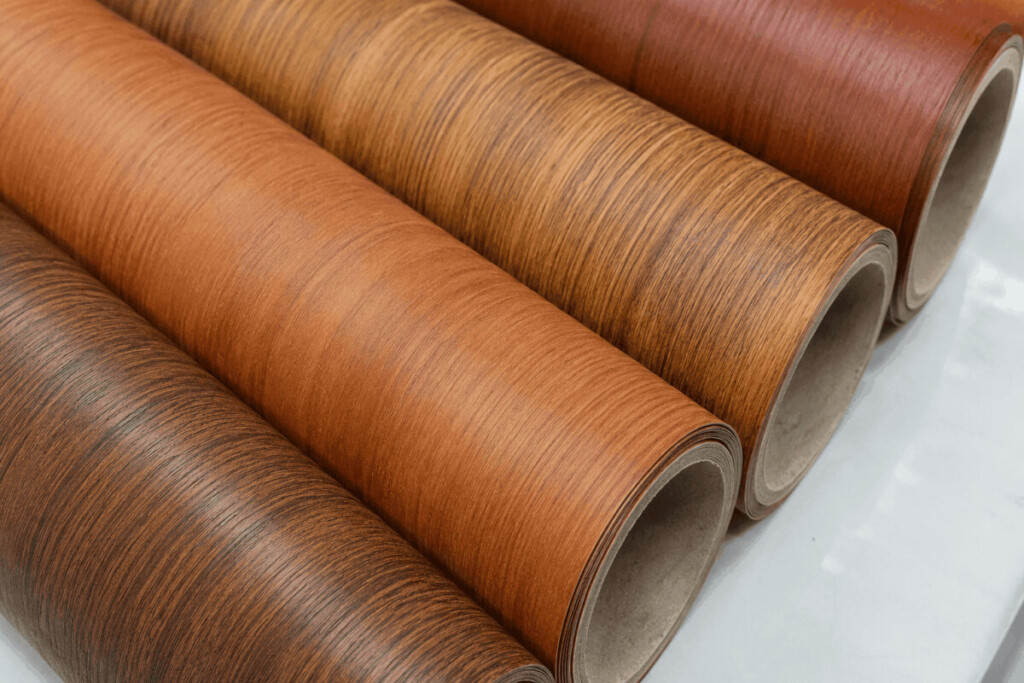
1. Decorative PVC Membrane Film
Decorative PVC membrane film is a surface film selected mainly for its look and feel. It can be offered in plain colours, wood-inspired patterns, stone-like designs or other decorative effects. Available textures and finishes depend on the supplier’s collection.
Possible finishes include smooth, matte, gloss, textured or wood-grain styles. These can help a furniture manufacturer offer different appearances and coordinate the finished product with the surrounding interior.
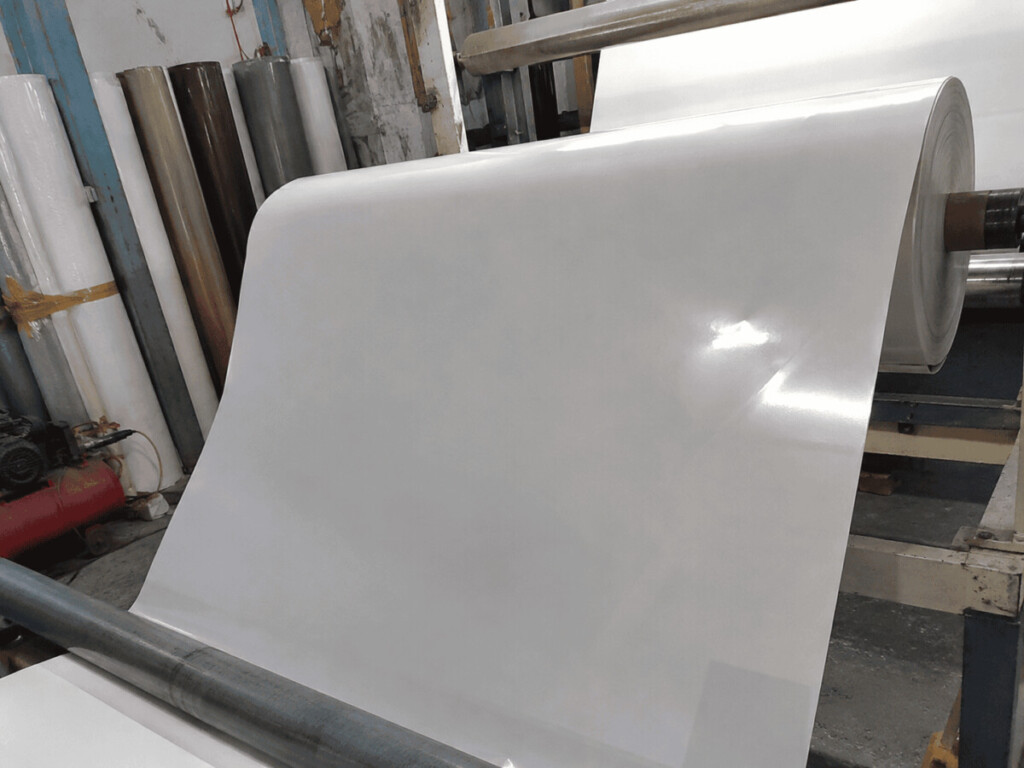
2. Rigid PVC Membrane Film
Rigid PVC membrane film is a supplier description for a film that is less flexible, or has a firmer feel, than a more flexible film. There is no single definition that applies to every seller. Ask for the product’s technical data and intended process.
Compared with a more flexible film, a rigid grade may behave differently around tight curves, deep grooves and sharp edges. It may be suitable for certain membrane-door designs, but its performance depends on its construction and the forming conditions. A firmer feel does not automatically mean greater durability or better quality.
Before purchasing, confirm:
- The recommended panel types and shapes.
- Whether it is suitable for membrane pressing or another process.
- The minimum forming details the supplier can support.
- The adhesive and processing conditions to use.
- Whether sample trials are available.
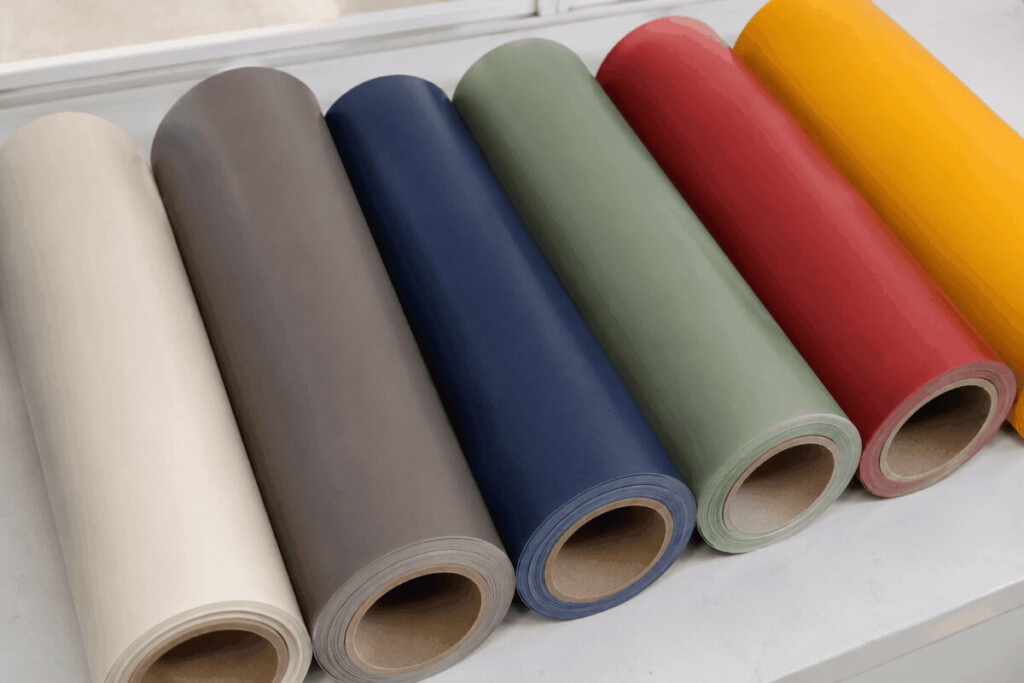
3. Colored PVC Membrane Film
Colored PVC membrane film is film supplied in a chosen colour or colour design. Options may include solid colours, printed colours, or colours combined with a texture or pattern.
Solid colours are often used for simple, modern furniture fronts. A manufacturer may also pair coloured doors with a contrasting wood-look panel or handle. Colour selection affects the overall feel of a room, furniture range or interior project.
Buyers should check colour consistency, available samples and the suitability of the film for their planned production.
4. Brown PVC Membrane Film
Brown PVC membrane film is a colour category that includes many brown shades and wood-inspired designs. It may be a plain brown film or a printed design intended to resemble wood grain.
Brown films are used on wooden-look membrane doors, cabinets and other furniture panels. Lighter browns can give a softer, more natural appearance, while deeper browns may create a richer, darker look. The result depends on the pattern, texture, sheen and surrounding materials.
When choosing a brown shade:
- Compare a physical sample with the room’s flooring and other finishes.
- Check the pattern scale and direction against the door size.
- View the sample under the lighting used in the intended space.
- Confirm that matching material will be available for future orders.
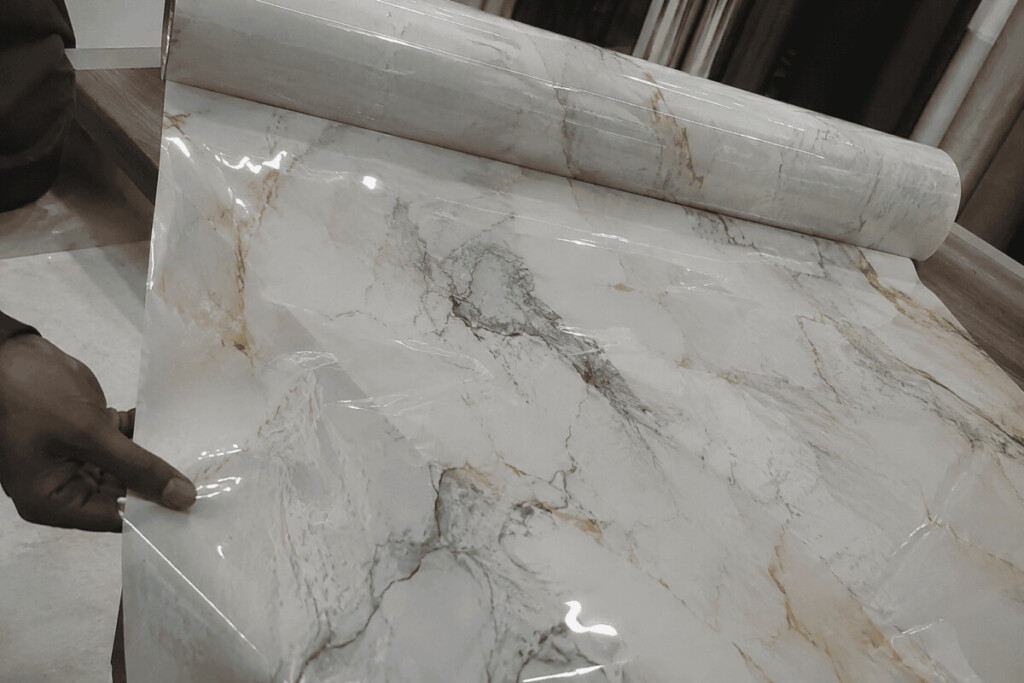
5. Thermoforming Rigid PVC Film
Thermoforming rigid PVC film is a film intended to be shaped using heat and pressure.
Thermoforming means heating a plastic sheet or film until it can be formed over or into a shape, then cooling it so it holds that shape. The exact process depends on the film and machine.
This category may be used for shaped decorative surfaces and suitable furniture components. Its name overlaps with other film descriptions: a supplier may use “thermoforming” to describe a process, while “rigid” describes how a film behaves. So it should not automatically be treated as a separate chemical material from PVC membrane foil.
How Is PVC Membrane Foil Used in Manufacturing?
Manufacturers use PVC membrane foil to cover prepared panels with a decorative surface. A common example is a routed MDF door covered using a membrane press, though the suitable materials and methods vary by product.
A typical process may include:
- Prepare the panel: Cut and shape the panel, then check that its surface is clean and suitable for bonding.
- Apply adhesive: Use an adhesive approved for the film and process, following its instructions.
- Position the film: Place the film so there is enough material to cover the panel and edges.
- Form and bond: Use the recommended heat and pressure or vacuum process.
- Cool and trim: Allow the part to cool as required, then trim excess film and inspect the edges and surface.
This is a general outline, not a machine-setting guide. Follow the adhesive, film and equipment instructions. Incorrect temperature, pressure, time or surface preparation can lead to poor bonding, wrinkles or other defects.
Top Applications of PVC Membrane Foil
PVC membrane foil is used on compatible furniture and interior panels, especially where a shaped or decorative surface is wanted. Suitability depends on the product, the panel and the production process.
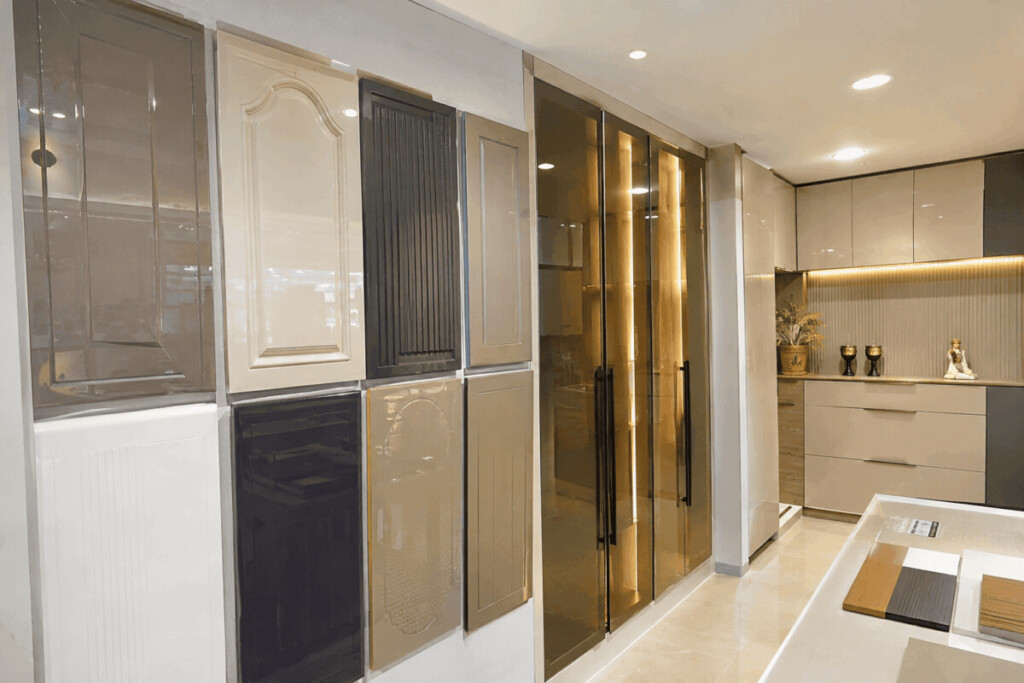
- Kitchen cabinet doors: Used on compatible cabinet fronts, including some routed or shaped designs. Confirm that the selected film and finished part meet the project’s cleaning and use requirements.
- Wardrobe doors: Can be used to create decorative finishes on compatible wardrobe panels.
- Modular furniture: A selection of colours and patterns can help manufacturers offer coordinated product ranges.
- Decorative furniture panels: Can cover certain shaped or detailed panels where a surface film is suitable.
- Office furniture: May be used on compatible desks, storage units or cabinet fronts.
- Interior decoration: Some films may suit decorative panels and other interior features. Check the product’s intended use before specifying it.
A film marketed for furniture should not automatically be assumed suitable for every setting. Ask the supplier about the intended application and any limits.
Major Benefits of PVC Membrane Foil
The main benefits of PVC membrane foil are its design choice and its ability to cover compatible shaped panels. The actual results depend on the product and how it is processed.
Potential benefits include:
- Many design options: Buyers may choose from colours, patterns, textures and surface effects.
- Coverage over shaped panels: Suitable films can be formed over certain grooves, edges and profiles.
- Coordinated furniture designs: Matching or complementary finishes can help create a consistent product range.
- Production flexibility: Manufacturers can select different films for different furniture styles or customer groups.
- A finished surface in one process: In suitable applications, a film can cover several visible faces and edges.
These benefits depend on selecting the right film and using the correct production setup.
PVC Membrane Foil Specifications
Product specifications are important when selecting PVC membrane foil for commercial furniture production.
Different panel sizes and manufacturing requirements need different film dimensions and thicknesses.
TopDecor PVC Membrane Foil Specifications
| Specification | Available Details |
|---|---|
| Product Name | PVC Membrane Foil |
| Thickness | 0.12 mm – 0.35 mm |
| Available Widths | 850 mm, 1000 mm, 1250 mm, 1320 mm |
| Roll Length | 350 metres |
| Surface Finishes | Matt and Gloss |
| Minimum Order Quantity | 2 Rolls |
| Application | Furniture and Interior Applications |
PVC Membrane Foil vs Other Decorative Surface Materials
PVC membrane foil and other surface materials are used in different ways, and the best choice depends on the panel shape, design and production process. The comparison below is general; product features vary by supplier.
| Material | Common use or process | Useful point to consider |
|---|---|---|
| PVC membrane foil | Formed over suitable panels using a compatible process | Can suit some shaped or profiled panels; confirm forming limits |
| Laminate | Often bonded to a flat panel or suitable surface | Available in many designs; handling edges and complex shapes may need a separate approach |
| Veneer | Thin wood layer bonded to a panel | Offers a real-wood surface; appearance and care needs differ from printed films |
| Paint or lacquer | Coating applied to a prepared surface | Offers colour and sheen choices; process and repair needs vary |
This is not a ranking. Compare the complete product, including substrate, edge treatment, installation conditions, expected use and maintenance requirements.
Why Does PVC Membrane Foil Thickness Matter?
Thickness is one of the important specifications when selecting PVC membrane foil.
The right thickness depends on the panel design, forming requirements and intended application.
For example, a manufacturer working with different furniture designs may need to evaluate more than one thickness before finalising a product.
TopDecor offers PVC membrane foil in thicknesses ranging from 0.12 mm to 0.35 mm.
Buyers should discuss their panel design and manufacturing process before selecting a particular thickness.
Why Is Film Width Important?
PVC membrane foil width determines how much panel surface can be covered from a roll.
TopDecor offers four available widths:
- 850 mm
- 1000 mm
- 1250 mm
- 1320 mm
Selecting the right width can help manufacturers plan material usage according to their panel dimensions.
What Is the Roll Length?
Roll length refers to the total running length of film supplied in one roll.
TopDecor PVC membrane foil comes in a 350-metre roll.
Knowing the roll length helps buyers estimate material requirements, production planning and inventory.
Applications of PVC Membrane Foil
PVC membrane foil is widely used in furniture and decorative surface applications.
It is particularly useful for suitable panels where manufacturers want a decorative finish across the surface and shaped edges.
1 Kitchen Cabinet Doors
Kitchen cabinet doors are one of the common applications of PVC membrane foil.
It can be applied to compatible MDF cabinet doors with different shapes and designs.
Manufacturers can select Matt or Gloss finishes depending on the desired appearance.
Before using any film in a kitchen, buyers should check its suitability for the expected heat, moisture, cleaning and usage conditions.
2 Wardrobe Doors
PVC membrane foil can be used to create decorative wardrobe doors.
Different colours and patterns allow furniture manufacturers to create designs that match bedroom interiors.
It can be particularly useful for compatible wardrobe panels with decorative shapes and profiles.
3 Modular Furniture
Modular furniture requires coordinated designs, colours and surface finishes.
PVC membrane foil provides different decorative options that furniture manufacturers can use for modular furniture components.
It can be used for selected cabinet doors, storage units and furniture panels.
4 Decorative Furniture Panels
Decorative furniture panels are used in different interior projects.
PVC membrane film can provide a finished appearance to compatible panels.
The final result depends on the design, film quality and application method.
5 Office Furniture
Office furniture also requires decorative surfaces that match the overall workspace design.
PVC membrane foil can be considered for suitable office cabinets, storage units and furniture panels.
The choice of finish depends on the furniture design and intended usage.
6 Interior Decoration
PVC membrane foil can also be used in selected decorative interior applications.
Its colour and finish options allow furniture manufacturers and designers to coordinate different surfaces within an interior project.
The product should always be checked for the intended application.
Benefits of PVC Membrane Foil
PVC membrane foil offers several benefits for furniture manufacturers and decorative panel producers.
1. Different Design Options
PVC membrane foil is available in different decorative designs and colour options.
This gives manufacturers more choices when developing furniture collections.
2. Matt and Gloss Finishes
Different surface finishes create different visual effects.
Matt finishes provide a low-sheen appearance, while Gloss finishes provide a more reflective surface.
3. Suitable for Shaped Furniture Panels
Compatible PVC membrane films can cover certain grooves, edges and decorative profiles.
This makes them useful for selected MDF furniture doors.
4. Different Thickness Options
Availability in different thicknesses allows manufacturers to evaluate suitable film grades according to their production requirements.
5. Multiple Width Options
Different roll widths help manufacturers select film according to panel dimensions and material planning.
6. Decorative Furniture Applications
PVC membrane foil can be used across several furniture applications, including kitchens, wardrobes, modular furniture and office furniture.
The actual benefits depend on the film grade, adhesive, substrate and manufacturing conditions.
7. Durability, Moisture and Heat Resistance
How long PVC membrane foil performs well depends on the quality of the film, the panel, adhesive and application process.
Buyers should understand the following factors before selecting a product.
Moisture Resistance
PVC membrane foil may be suitable for certain furniture applications where occasional moisture exposure is expected.
However, the performance of the finished panel also depends on edge bonding, substrate quality and installation.
It should not automatically be considered waterproof.
Heat Resistance
Heat performance varies according to the PVC film formulation and product grade.
For kitchen applications, buyers should consider the location of the furniture in relation to ovens, cooking appliances and other heat sources.
Request product-specific temperature information before using the film in demanding conditions.
Surface Scratches
Surface scratch resistance depends on the film’s construction and finish.
A physical sample test can help buyers understand how the surface responds to normal handling and cleaning.
Adhesion and Edge Bonding
Good adhesion is important for the appearance and performance of a finished membrane door.
Incorrect adhesive selection or processing can cause edge lifting, wrinkles and bonding problems.
Always follow the supplier’s recommended process.
PVC Membrane Foil vs Other Decorative Surface Materials
PVC membrane foil is one of several materials used for furniture decoration.
Other common options include HPL, laminate and wood veneer.
| Material | Application | Main Difference |
|---|---|---|
| PVC Membrane Foil | Compatible shaped MDF panels and furniture doors | Can cover suitable shaped surfaces and edges |
| HPL | Furniture panels and interior surfaces | High-pressure decorative laminate construction |
| Decorative Laminate | Flat furniture surfaces and panels | Commonly bonded to suitable substrates |
| Wood Veneer | Furniture and decorative panels | Uses a thin layer of real wood |
PVC Membrane Foil vs HPL
PVC membrane foil and HPL are different decorative surface materials.
PVC membrane foil can be formed over suitable shaped furniture panels using a compatible membrane pressing process.
HPL is a high-pressure laminate used on suitable furniture and interior surfaces.
The right choice depends on panel design, production machinery, appearance and intended application.
PVC Membrane Foil vs Laminate
Decorative laminate is commonly used on flat furniture surfaces, while suitable PVC membrane foil can cover certain shaped panels and edges.
Both materials offer different design possibilities.
Manufacturers should compare the complete application process before selecting either option.
PVC Membrane Foil vs Vacuum Membrane Film
Vacuum membrane refers to an application process in which a membrane press uses vacuum to help form film over a panel.
PVC membrane foil is a type of decorative film that may be used in a suitable vacuum membrane application.
In simple terms, one describes the material and the other describes the forming process.
PVC Membrane Foil Price in India
The price of PVC membrane foil in India depends on several product and purchasing factors.
There is no single fixed price for every PVC membrane film because different specifications and designs can have different costs.
Factors Affecting PVC Membrane Foil Price
1. Film Thickness
Thickness is one factor that can affect the material cost. Buyers should compare products with similar specifications.
2. Film Width
Available widths influence material consumption and production planning.
3. Surface Finish
Matt and Gloss finishes may have different product costs depending on the supplier and product range.
4. Colour and Design
Special decorative designs and colour options may affect pricing.
5. Order Quantity
Bulk purchasing and order quantity can influence the commercial quotation.
6. Transportation
Freight and delivery location can also affect the final landed cost.
TopDecor PVC Membrane Foil Ordering Details
- Thickness: 0.12–0.35 mm
- Width: 850–1320 mm (available widths as specified)
- Roll Length: 350 metres
- Finish: Matt and Gloss
- MOQ: 2 rolls
For the latest PVC membrane foil price, buyers can contact the TopDecor team with their required thickness, width, finish and quantity.
How to Choose the Right PVC Membrane Foil
Choose PVC membrane foil by matching the film to the panel shape, production method and required appearance. Start with the application, then confirm the technical details with the supplier.
Follow these steps:
- Define the application: Identify whether the film is for a kitchen cabinet door, wardrobe, office unit or another furniture component.
- Check the panel shape: Look at the flat areas, grooves, edges, curves and profiles that the film must cover.
- Select the appearance: Compare colours, wood patterns, textures and surface finishes using physical samples.
- Confirm process compatibility: Ask whether the film is intended for your press, adhesive, panel and forming conditions.
- Review the specifications: Check dimensions, thickness, tolerances, storage and any stated performance information.
- Run a production trial: Test a representative panel and inspect the surface, edges and bonding.
- Plan repeat supply: Ask about batch consistency, availability and the process for reordering a matching design.
For B2B buyers, a sample roll or production-scale trial can be more useful than choosing from a catalogue image alone.
Common Problems and Tips for Better Results
Many membrane-film problems come from a mismatch between the film, adhesive, panel or processing conditions. Troubleshoot the whole process before assuming the film itself is at fault.
- Lifting edges: Check panel preparation, adhesive coverage and process conditions.
- Wrinkles or folds: Review film positioning, forming technique and whether the design exceeds the film’s forming suitability.
- Poor bonding: Confirm that the adhesive is compatible and has been applied and processed according to its instructions.
- Surface marks: Inspect the film, panel and machine surfaces, and handle material in a way that avoids damage.
- Colour mismatch: Compare samples under consistent lighting and check whether rolls come from the same production batch.
Keep written records of the film batch, adhesive, panel, machine settings and results. Follow supplier instructions when making process changes.
Who Should Buy PVC Membrane Foil?
PVC membrane foil is relevant to businesses that make, sell or specify furniture and decorative panels. This includes:
- PVC membrane door manufacturers.
- Furniture and MDF door manufacturers.
- Interior designers and project specifiers.
- Dealers, distributors and material traders.
- Cabinet and modular furniture producers.
Before sourcing, buyers should define the application and ask for suitable samples and technical details. Dealers and distributors should also confirm how designs are identified and reordered so customers can match future supply.
Comparison Tables
Table 1: Comparison of PVC Membrane Film Categories
| Product type | Main characteristics | Appearance |
|---|---|---|
| Decorative PVC Membrane Film | Decorative surface film; forming suitability varies | Plain colours, patterns, textures and finishes |
| Rigid PVC Membrane Film | Supplier-described as firmer or less flexible; confirm specifications | May be plain, patterned or textured |
| Colored PVC Membrane Film | Defined by colour choice; may be solid or patterned | Solid colours or decorative colour designs |
| Brown PVC Membrane Film | Colour category with brown shades and wood-inspired patterns | Plain brown or wood-grain appearance |
| Thermoforming Rigid PVC Film | Intended for shaping using heat and pressure | Depends on the film design and finish |
These are practical market categories, not five completely separate chemical materials. Confirm a supplier’s terminology and technical data before comparing products.
Table 2: PVC Membrane Foil Buying Checklist
| Buying factor | What to check | Why it matters |
|---|---|---|
| Thickness | Stated thickness and tolerance | Helps assess handling and suitability for the process |
| Width | Roll width and usable coverage | Must match panel dimensions and planning |
| Roll length | Length, winding and packaging details | Supports stock and material-use estimates |
| Finish | Surface texture, sheen and sample appearance | Helps meet the design requirement |
| Colour and design | Sample, pattern direction and batch consistency | Reduces visible mismatch across panels |
| Flexibility and formability | Supplier’s intended use and forming guidance | Helps match film to panel shape |
| Surface quality | Check samples for visible defects and consistency | Supports acceptable finished products |
| Adhesion compatibility | Approved adhesive and suitable panel surface | Bonding relies on a compatible material and process |
14. Frequently Asked Questions About PVC Membrane Foil
1. What is PVC membrane foil?
PVC membrane foil is a decorative plastic film used to cover suitable furniture panels, MDF doors, and shaped surfaces. It is commonly applied using a suitable adhesive and membrane pressing process.
2. What is PVC membrane foil used for?
PVC membrane foil is used for kitchen cabinet doors, wardrobe doors, modular furniture, decorative furniture panels, office furniture and selected interior applications.
3. What are the different types of PVC membrane foil?
Common product categories include decorative PVC membrane film, rigid PVC membrane film, coloured PVC membrane film, brown PVC membrane film and thermoforming rigid PVC film.
4. What thickness is available in TopDecor PVC membrane foil?
TopDecor offers PVC membrane foil in thicknesses ranging from 0.12 mm to 0.35 mm.
5. What widths are available in PVC membrane foil?
The available widths are 850 mm, 1000 mm, 1250 mm and 1320 mm.
6. What is the roll length of TopDecor PVC membrane foil?
The confirmed roll length is 350 metres per roll.
7. What finishes are available?
TopDecor offers Matt and Gloss finishes in its PVC membrane foil range.
8. What is the minimum order quantity?
The minimum order quantity for TopDecor PVC membrane foil is 2 rolls.
9. Is PVC membrane foil suitable for kitchen cabinets?
Suitable PVC membrane foil can be used on compatible kitchen cabinet doors. Buyers should confirm its suitability for the expected heat, moisture, and cleaning conditions.
10. What is the difference between Matt and Gloss PVC membrane foil?
Matt PVC membrane foil has a low-sheen surface appearance, while Gloss PVC membrane foil has a more reflective appearance. The choice depends on the furniture design and desired look.
11. Is PVC membrane foil waterproof?
PVC film itself may resist certain moisture exposures, but the complete finished panel is not automatically waterproof. Substrate, edges, adhesive, and installation also affect moisture performance.
12. How is PVC membrane foil applied to MDF doors?
It is generally applied using a suitable adhesive and membrane press. Heat and vacuum or pressure help the film cover the prepared MDF panel and its shaped edges.
13. What affects PVC membrane foil prices in India?
Thickness, width, finish, design, order quantity, supplier, and transportation can affect the final price.
14. What is the difference between PVC membrane foil and HPL?
PVC membrane foil is commonly used for suitable shaped furniture panels, while HPL is a high-pressure laminate used on compatible furniture and interior surfaces. Their materials and application processes differ.
15. How should PVC membrane foil be maintained?
Use a soft cloth and suitable mild cleaning products. Avoid abrasive scrubbers, harsh chemicals and excessive heat. Follow the product-specific care instructions.
Conclusion
PVC membrane foil is an important decorative surface material used in furniture manufacturing and interior applications.
It offers different thicknesses, widths and surface finishes, making it useful for manufacturers working with kitchen cabinet doors, wardrobe doors, modular furniture and decorative panels.
However, choosing the right film is important. Buyers should consider the panel design, thickness, width, finish, adhesive compatibility and manufacturing process before placing an order.
TopDecor offers PVC membrane foil in thicknesses from 0.12 mm to 0.35 mm, widths of 850 mm, 1000 mm, 1250 mm and 1320 mm, with a 350-metre roll length and Matt and Gloss finishes.
Looking for PVC Membrane Foil for your furniture manufacturing business?
Connect with TopDecor to explore available specifications, discuss your requirements and request product samples.
Panel and equipment before placing a large order.
Related Reading
- TD 108 Petlam Film: Luxury Blue & Gold Marble for Doors and Partitions – another design story from the TopDecor Design Blog.
- PVC Decor Film from TopDecor – designs, widths and finishes.
- TopDecor Design Library – browse decor film designs by category.
- Decor Film Applications – doors, kitchens, furniture and interiors.
Want to see this on your product?
Request a free sample, or talk to our factory team in Kundli on WhatsApp.